Blog
Product Content Chaos: The True Cost for B2B Organizations
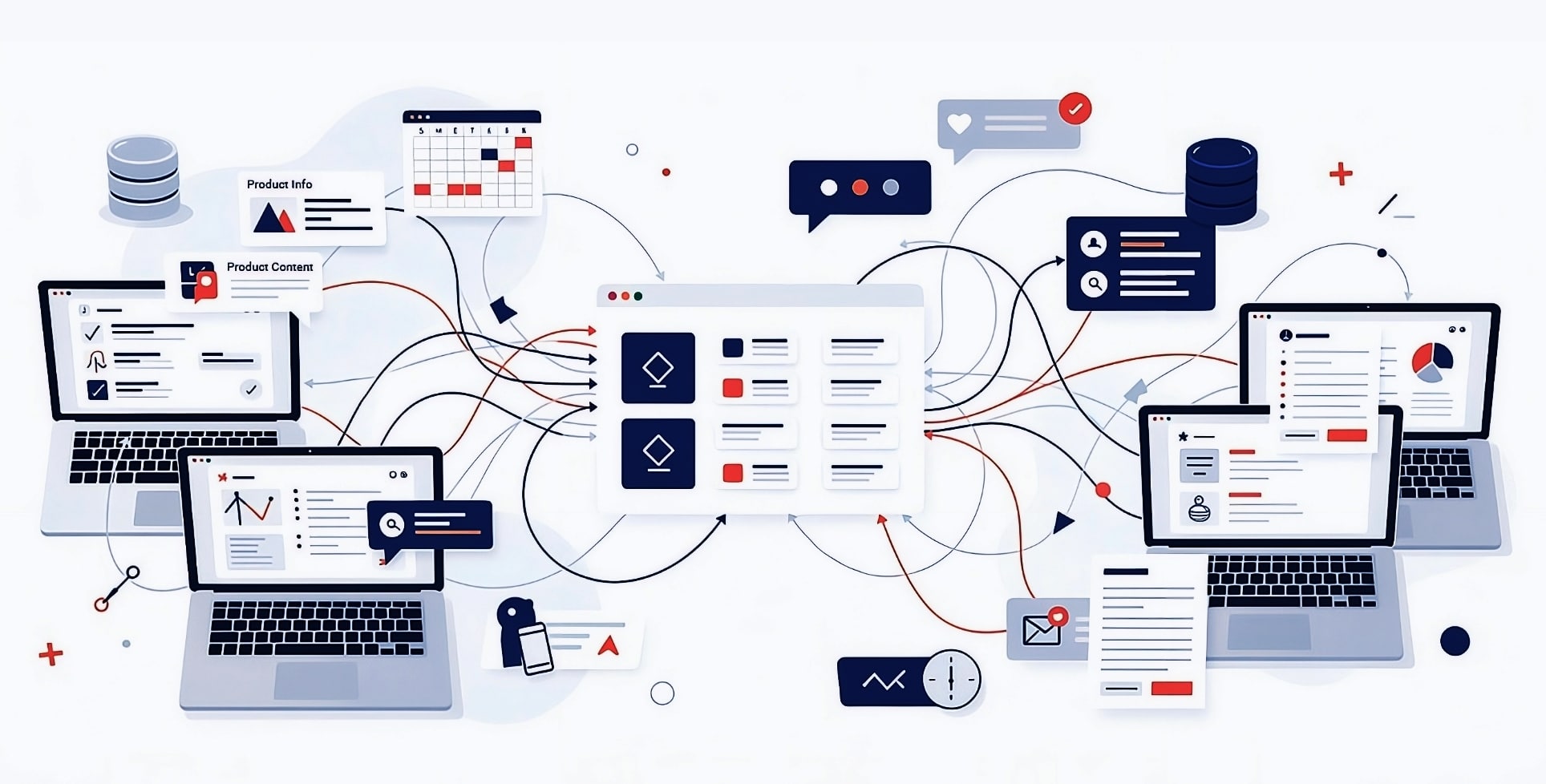
In many organizations, product content simply feels like it “doesn’t quite work smoothly.”
There is always pressure. Always a last-minute correction. Always one more spreadsheet, one extra check, a final manual adjustment just before something goes live. Most of the time, it works.
Because product content chaos is often compensated for in day to day operations, many companies fail to recognize it as a structural problem.
In conversations with complex B2B organizations, product content chaos is almost never described in those words. Instead, people talk about growth, complexity, or temporary overload:
“We’re scaling fast.”
“It’s part of our growth phase.”
“It’s a busy period.”
But beneath those explanations, the same pattern appears again and again: fragmented data, manual processes, and a lack of end-to-end visibility.
How Missing Ownership Fuels Product Content Chaos
Definition: Product Content Chaos
Product Content Chaos describes a situation in which product information is spread across multiple systems, teams and formats, without clear governance, consistent data models or end to end ownership.
Product content chaos rarely starts with a single bad decision or one failing system. It emerges gradually, through years of well-intended workarounds within the product content management. A spreadsheet created “just for now”, an exception added to handle a specific case or a manual step introduced to fix an urgent issue.
Each decision makes sense in isolation. Together, they create an environment in which no one fully oversees the whole. And when no one sees the full picture, no one truly owns the problem.
That is exactly what makes chaos in product content management so persistent.
The costs are real, but they are scattered across teams and processes. They don’t show up as a single line item on a balance sheet. They are hidden in lost hours, rework, delays, and frustration. As a result, the issue is rarely discussed explicitly, let alone addressed structurally.
The Hidden Costs of Product Content Chaos
The true cost of product content chaos often remains invisible until something goes wrong. Not because the impact is small, but because it is distributed.
Teams spend a significant portion of their working time correcting errors in product information that could be avoided with clear processes and solid governance. Product launches are delayed because information is incomplete or inconsistent, and mistakes are fixed downstream instead of prevented upstream.
What appears to be operational inefficiency is, in reality, a structural pattern.
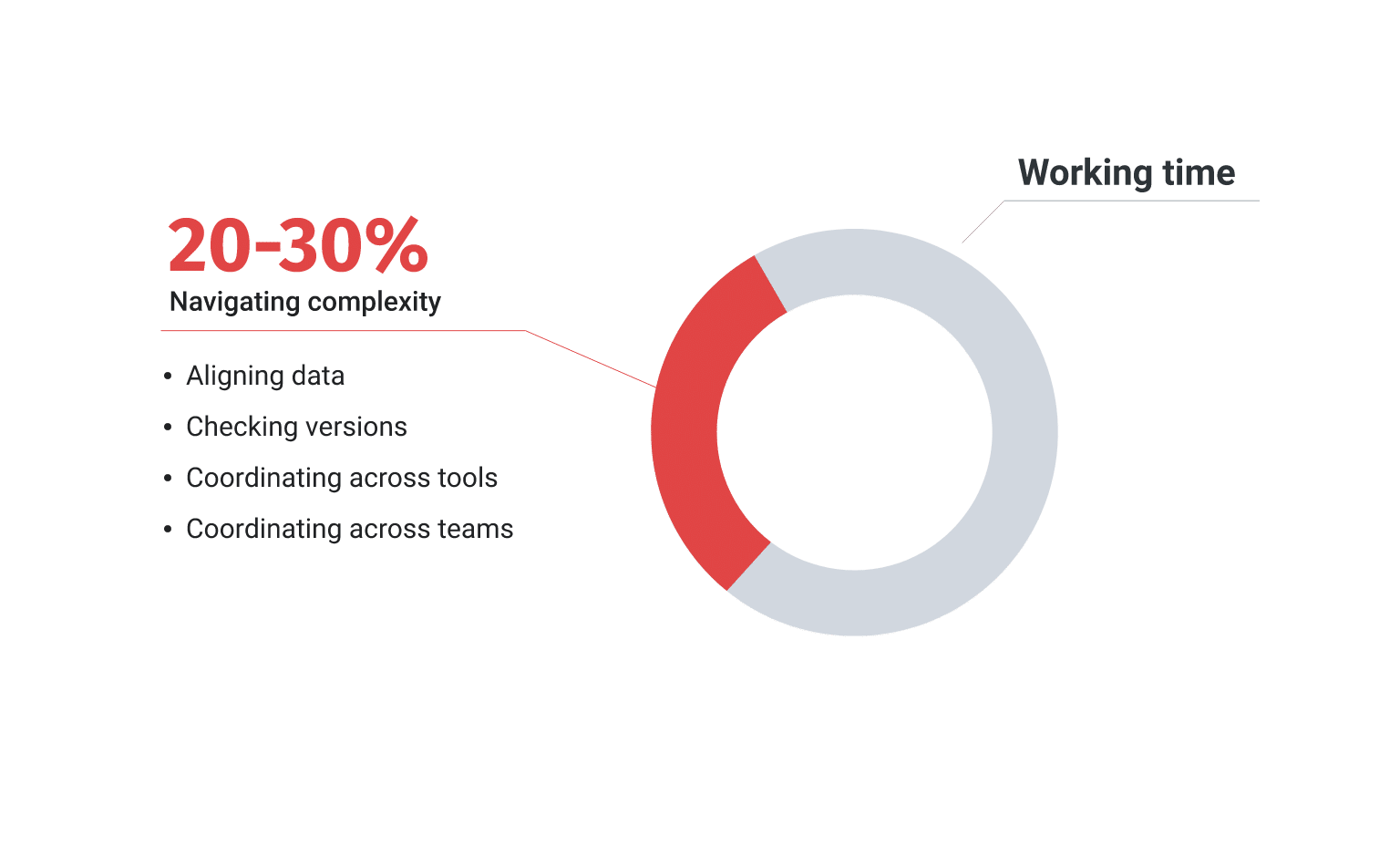
In many organizations, this translates into 20 to 30 percent of valuable time being spent navigating complexity instead of creating value: aligning data, checking versions, and coordinating across tools and teams. Time that could otherwise be invested in improving products, accelerating go-to-market, or serving customers better.
Over time, that pattern becomes normalized, people adapt, they compensate. They work around the system until the moment comes when compensation is no longer enough.
When Product Content Chaos Becomes a Risk for Management and Governance
Interestingly, product content chaos usually becomes a board-level topic only when escalation occurs. Fines, audits, recalls, compliance issues, reputational damage, or the loss of key customers suddenly force attention.
At this point, it becomes clear that product content chaos is not an isolated operational issue. It is a strategic question of governance and control over product information and no longer just an IT topic or a marketing problem.
In situations like these, it becomes clear that product content management is ultimately about control. About whether an organization truly understands and governs its own product information and, by extension, its compliance, scalability and long-term resilience.

At this point, the question is no longer whether product information needs to be managed more effectively, but how this can be done successfully.
Why Product Information Management Is the Foundation for Consistent Product Data
Product Information Management (PIM) does not emerge from a simple need for another tool. It is a response to fragmented product data, missing governance and manual workarounds that create product content chaos.
A PIM system establishes a central, authoritative source for product information. It defines data models, responsibilities and processes across the entire product lifecycle, from creation and maintenance to omnichannel distribution.
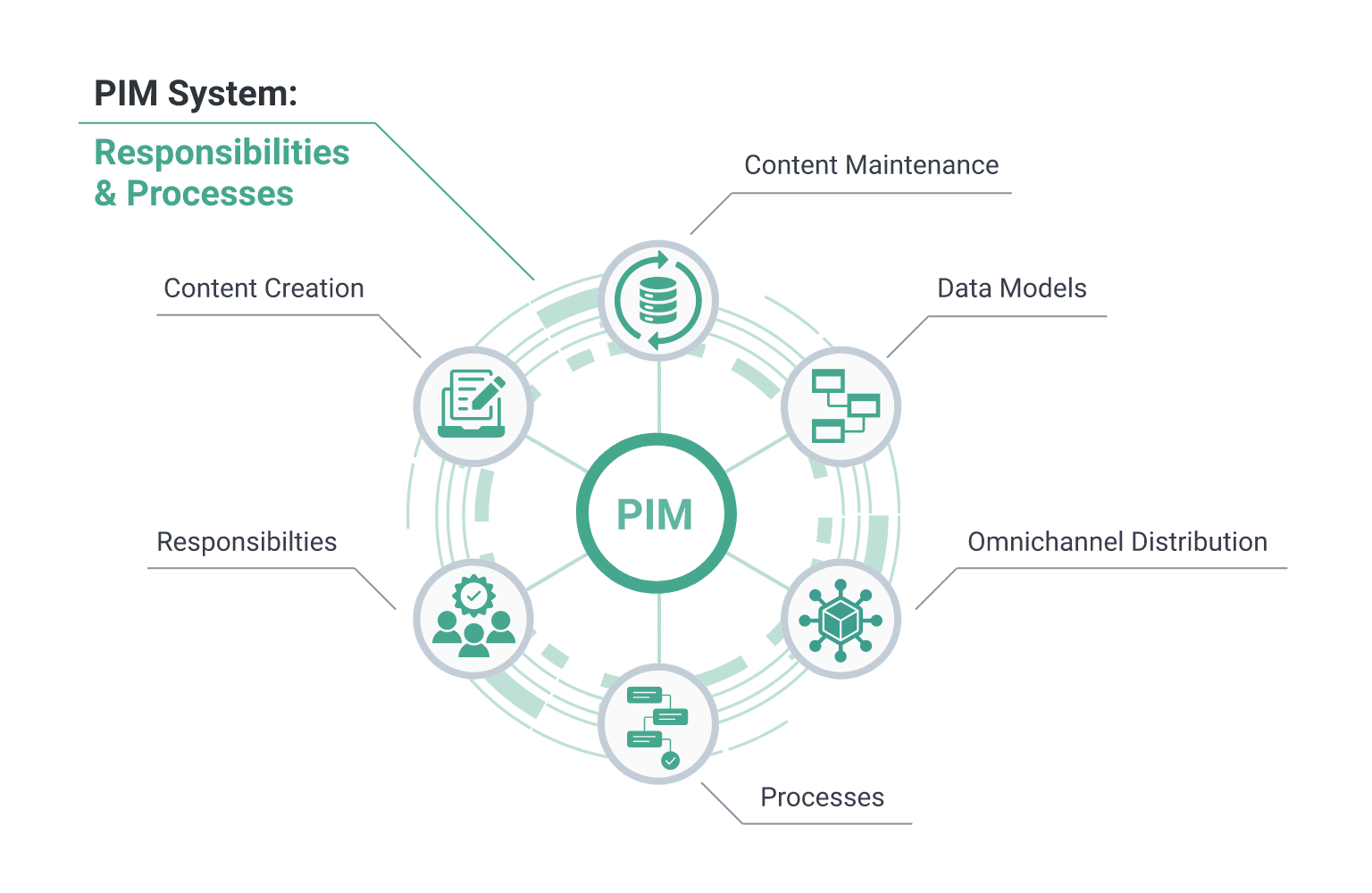
What matters most is this: PIM does not automatically resolve product content chaos. Without clear organizational ownership and aligned processes, even a PIM system will remain ineffective.
How Product Content Chaos Puts a Lasting Strain on Operational Teams
Behind every fragmented system and every manual workaround are operational teams compensating for chaos in product data management every single day. Product owners, category managers, channel managers. They are the ones closing gaps, correcting errors, and ensuring deadlines are met despite structural limitations.
They are often the first to sense that something is fundamentally misaligned, Organizationally. They recognize that the situation is unsustainable, yet struggle to articulate it as a structural issue rather than a temporary inconvenience.
Instead of structural improvement, teams are stuck in professional firefighting. Product content chaos is managed, but not resolved.
A PIM software can provide relief here.
Why Ignoring Product Content Chaos Erodes Long Term Competitiveness
One of the most common misconceptions about chaos in product content management is that it will stabilize on its own, that it is temporary or that it is simply the cost of growth.
In reality, complexity within product content management rarely decreases.
New channels, stricter regulations, and expanding product portfolios continuously intensify product content chaos.
Organizations that delay improvement do not stand still, they fall behind. While internal teams are busy managing complexity, competitors continue to improve. Time-to-market slows down, sales opportunities are missed, market share erodes, and brand consistency suffers.
Over time, this directly affects customer trust and loyalty.
Inaction is not a neutral stance. It is a conscious decision to push the costs created by the chaos into the future, where they usually become significantly higher.
Recognizing Product Content Chaos as the Foundation for Sustainable Solutions
Before organizations can meaningfully improve how they manage product content, they must first be willing to name the problem for what it is. Not as annoyance, but as a structural reality. Not as a tooling issue, but as an organizational one.
Note: Product content chaos is not a sign of failure. It is a signal that existing product content management structures no longer match the complexity of the organization.
Only when organizations clearly identify product content chaos and understand it as a structural challenge can sustainable improvement become possible. Not only through tools like a PIM system, but also through clear ownership and accountability across product content management processes.

Highlighted Whitepaper
ePaper: Strategic Product Content Management with PIM & DAM
Hoe je je product content management duurzaam kunt optimaliseren: in onze whitepaper laten we je zien hoe je je processen kunt optimaliseren met een PIM & DAM – inclusief waardevolle inzichten en beproefde strategieën.
Samen meer bereiken
Wij geloven in de waarde van samenwerking en uitwisseling. Dit geldt zowel de projecten met onze klanten, waaruit we veel waardevolle inzichten genereren voor onze productontwikkeling, als voor ons groeiende partnernetwerk, waarmee we onze klanten ondersteunen bij hun digitalisering.